Home
/
Fish species
/
Celestial Pearl Danio
Celestial Pearl Danio
Origin
Myanmar
Habitat Size
20-50 Liters
Water Type
Fresh Water
Water Temperature
22º-26ºC
Cost in India
₹50 - ₹100
Size
1 - 2 inches (Nano)
Diet
Omnivore

by Happy Pet TeamUpdated on 2 Dec 2025
Introduction to the Celestial Pearl Danio
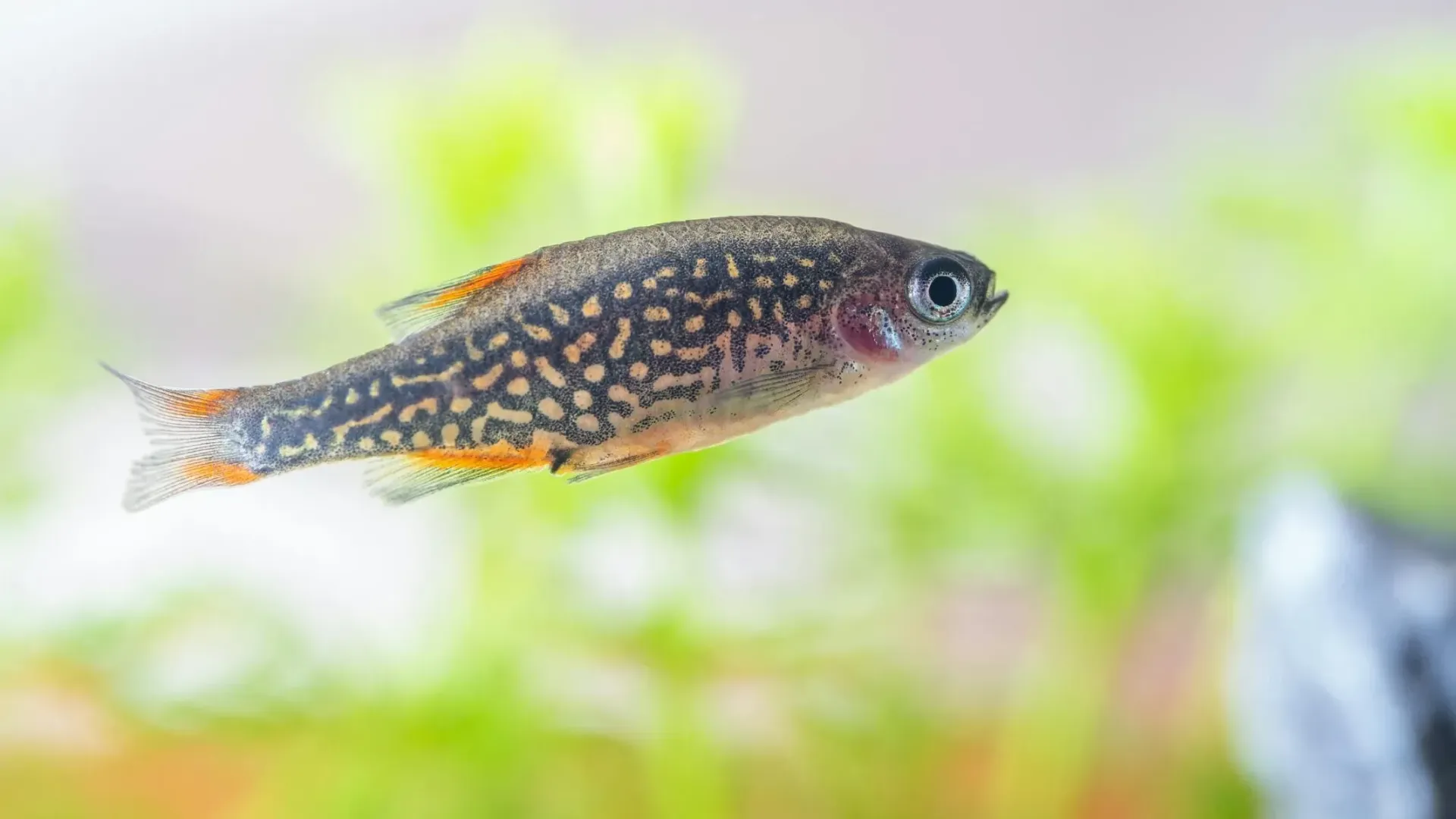
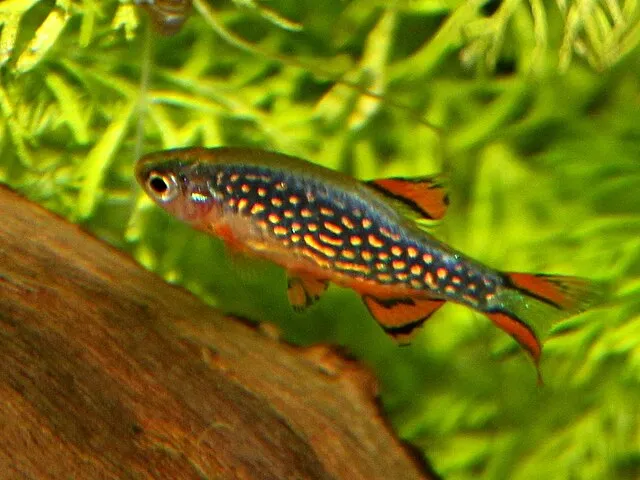
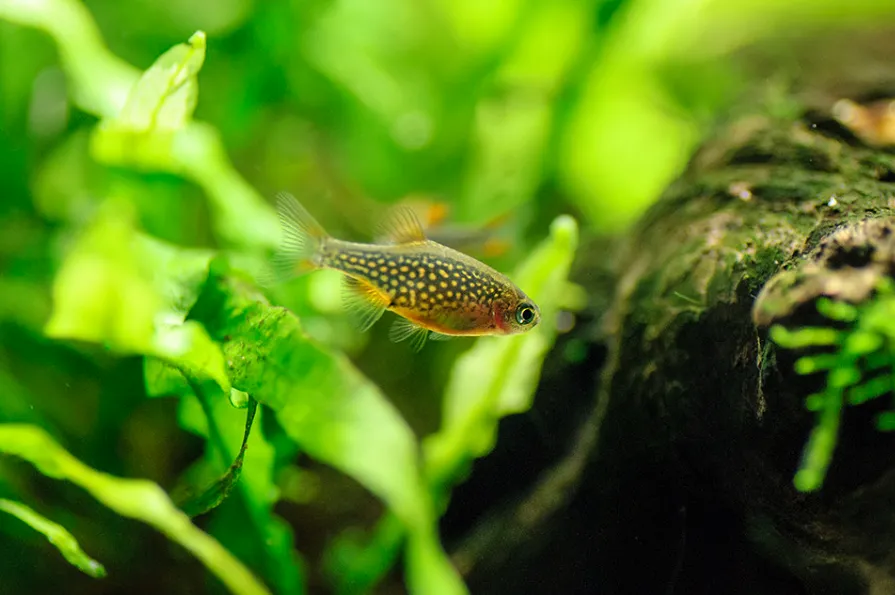
The Celestial Pearl Danio or Galaxy Rasbora, (Danio margaritatus) is one small but beautiful freshwater fish that is sought after for its stunning colors. The blue-black colored body with white spots resembling pearls appearing as stars, where the bright orange or red fins provide even greater dramatic contrast. Males should be best colored with reddish fins, whereas females are bloated and drab.
Ever since its discovery in 2006, the fish has been a favorite among aquarium hobbyists due to its warm nature, small size, and reasonable level of community tank tolerance. In spite of its dainty look, the fish is very hardy under favorable conditions, thereby deserving its recognition even to new owners.
Origin of the Celestial Pearl Danio
Celestial Pearl Danios live in shallow, vegetation-filled fresh water lakes and ponds of Myanmar. The environments are peaceful, heavily vegetated, and shallow with abundant food and shelter for the small fish. Their relatively restricted natural range caused early overcollection concern but are nowadays extensively cultured in aquaria and may be obtained without threatening wild populations.
Temperament of the Celestial Pearl Danio
Celestial Pearl Danios are peaceful, schooling fish and like to be in schools. Males will show fleeting moments of aggression during spawning or territorial disputes but never become aggressive and even make good viewing. Due to how peaceful they are, they are suited to planted tanks as well as community tanks with tank dwellers of similar size.
Celestial Pearl Danio Compatibility with Other Fish
Celestial Pearl Danios coexist well with most other small, peaceful fish species. The following are suitable tankmates:
- Neon tetras, ember tetras, and harlequin rasboras
- Corydoras catfish
- Small snails and shrimp
- Other peaceful danios or microfish
Do not keep them with territorial, large cichlids or barbs as they will fin nip or regard danios as food. Keeping them in groups of six or more members prevents stressing and displays natural shoaling behavior.
Price Range of Celestial Pearl Danio
Celestial Pearl Danios are rather expensive for their fame. They retail between ₹150 to ₹400 (US $2–5) per fish. Due to their small size, aquarists do buy sets, which is more expensive but guarantees proper schooling behavior.
Characteristics
Temperament
Aggressive
Friendly
Compatibility with other fishes
Not Friendly
Super Friendly
Habitat Size
Small
Large


Habitat Requirements of the Celestial Pearl Danio
Initial Setup Cost
₹3,000 - ₹6,000
Water Temperature
22º -26ºC
Water Type
Fresh Water
PH Level
6.5 - 7
Tank Setup
- Minimum tank capacity: 10 gallons for a small group
- Recommended: 20 gallons or greater for large schools and planted aquariums
- Features: close planting, open swimming space, soft filtration
Water Conditions
- Temperature: 22–26°C (72–79°F)
- pH level: 6.5–7.5
- Hardness: 2–10 dH
Environment Requirements
Celestial Pearl Danios prefer tanks with:
- Fine sand or gravel substrate
- Tight water plants like Java moss, Anubias, and floating plants
- Rocky or driftwood or cave hiding places
- Sufficient light to enhance the color of their bodies
Essential Equipment
Aquarium tank
Water filter
Heater
Light
Substrate
Nutritional Guide of the Celestial Pearl Danio
Avg Monthly Expenses
₹50 - ₹ 100
Celestial Pearl Danios are omnivorous and require a varied diet. Due to their small mouth, they are not able to eat large food and therefore require food of the appropriate size such as:
- Staple: high quality micro pellets or flake
- Protein: frozen or live food such as daphnia, brine shrimp, and bloodworms
- Vegetables: blanched spinach, cucumber, or spirulina-based foods
Feeding tips:
- Feed 2–3 times a day in small amounts
- Make sure food is finely crushed to suit their small mouths
- Alternate diet for enhancing intense colouration and lush healthiness


Health & Care of the Celestial Pearl Danio
Common Health Issues
Fin rot
White spot / ick
Fungus
Columnaris (cotton wool-like growth on the skin)
Ammonia poisoning
Swim bladder inflammation
Signs of good health
Active
Bright coloration
Good apetite
Signs of sickness
Lethargic behaviour
Loss of appetite
Dull coloring
Tattered fins
Frequent hiding
Common Issues
Ich (White Spot Disease)
A common parasite that shows up as tiny white dots on the body or fins.
- Symptom: White spots, pale color, loss of appetite.
- Cure: Use anti-parasitic medication and maintain stable water temperature.
Fin Rot
Bacterial infection is often caused by poor water quality.
- Symptom: Torn or frayed fins.
- Cure: Improve water conditions and treat with antibacterial medication.
Stress Disease
Stress occurs when housed with aggressive or fin-nipping tankmates.
- Symptom: Restlessness, hiding, reduced feeding.
- Cure: Avoid aggressive tankmates and ensure a peaceful environment.
Prerequisites for a Fish
Adequate tank space
Cleanliness
Effort & commitment
Enriching Environment
Written by
Happy Pet TeamAuthor
Team Happy Pet is a passionate collective of pet experts, enthusiasts, and advocates dedicated to sharing trusted and insightful content.
Our cont
Frequently Asked Questions
What type of diet do Celestial Pearl Danios require?
Celestial Pearl Danios are omnivores and thrive on a varied diet of flake foods, micro pellets, and live or frozen foods like brine shrimp and daphnia.
How big should the tank be for Celestial Pearl Danios?
A tank for Celestial Pearl Danios should be at least 20 liters to accommodate a small school of these active fish.
What signs indicate that a Celestial Pearl Danio might be sick?
Signs of sickness include loss of appetite, lethargic behavior, dull coloring, tattered fins, and abnormal swimming patterns.