Home
/
Fish species
/
Copperband Butterflyfish
Copperband Butterflyfish
Origin
Indo-Pacific
Habitat Size
150-400 Liters
Water Type
Salt Water
Water Temperature
24º-28ºC
Cost in India
₹200 - ₹300
Size
7 - 8 inches (Medium)
Diet
Omnivore

by Happy Pet TeamUpdated on 2 Dec 2025
Copperband Butterflyfish Fish Guide
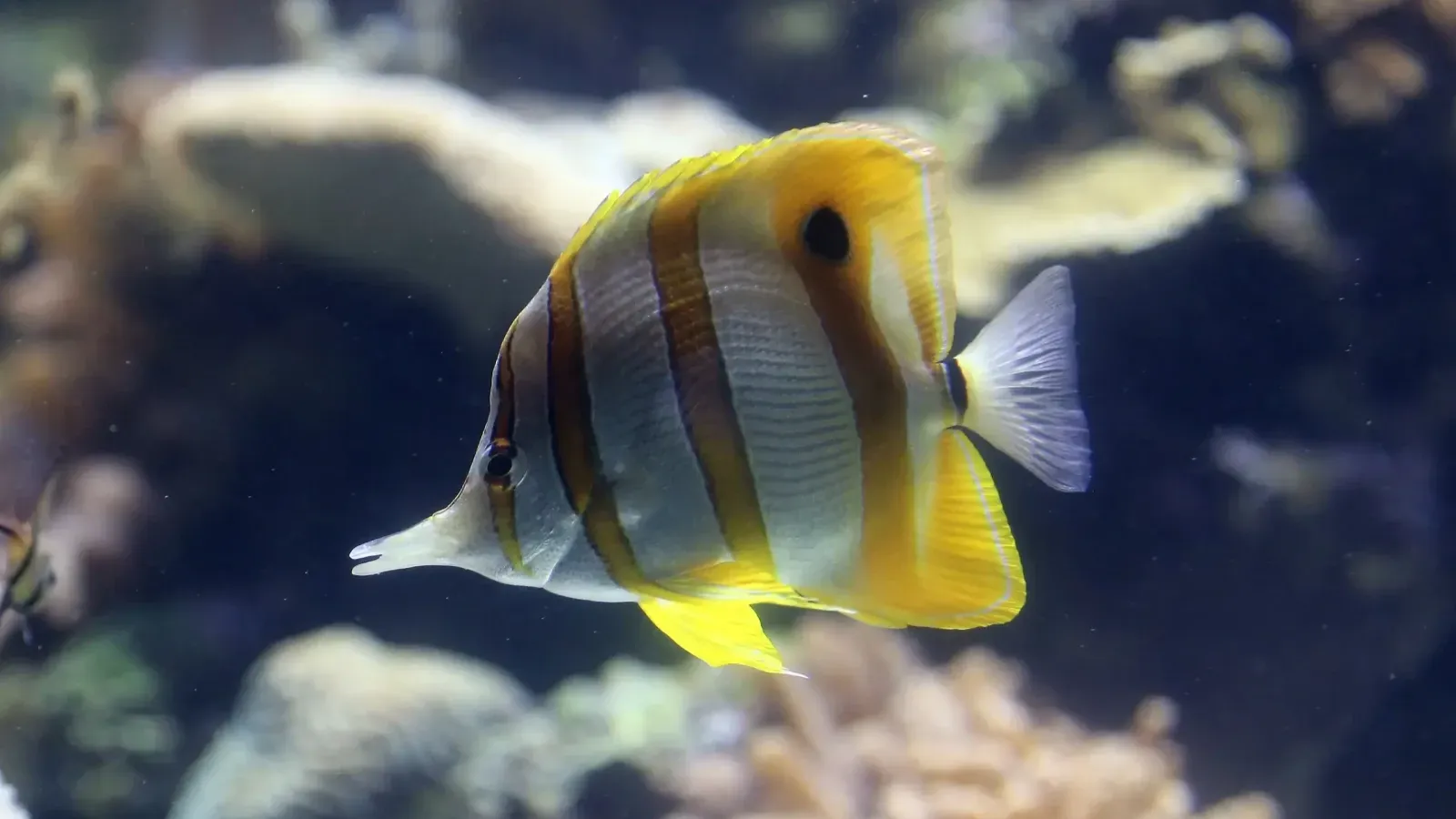
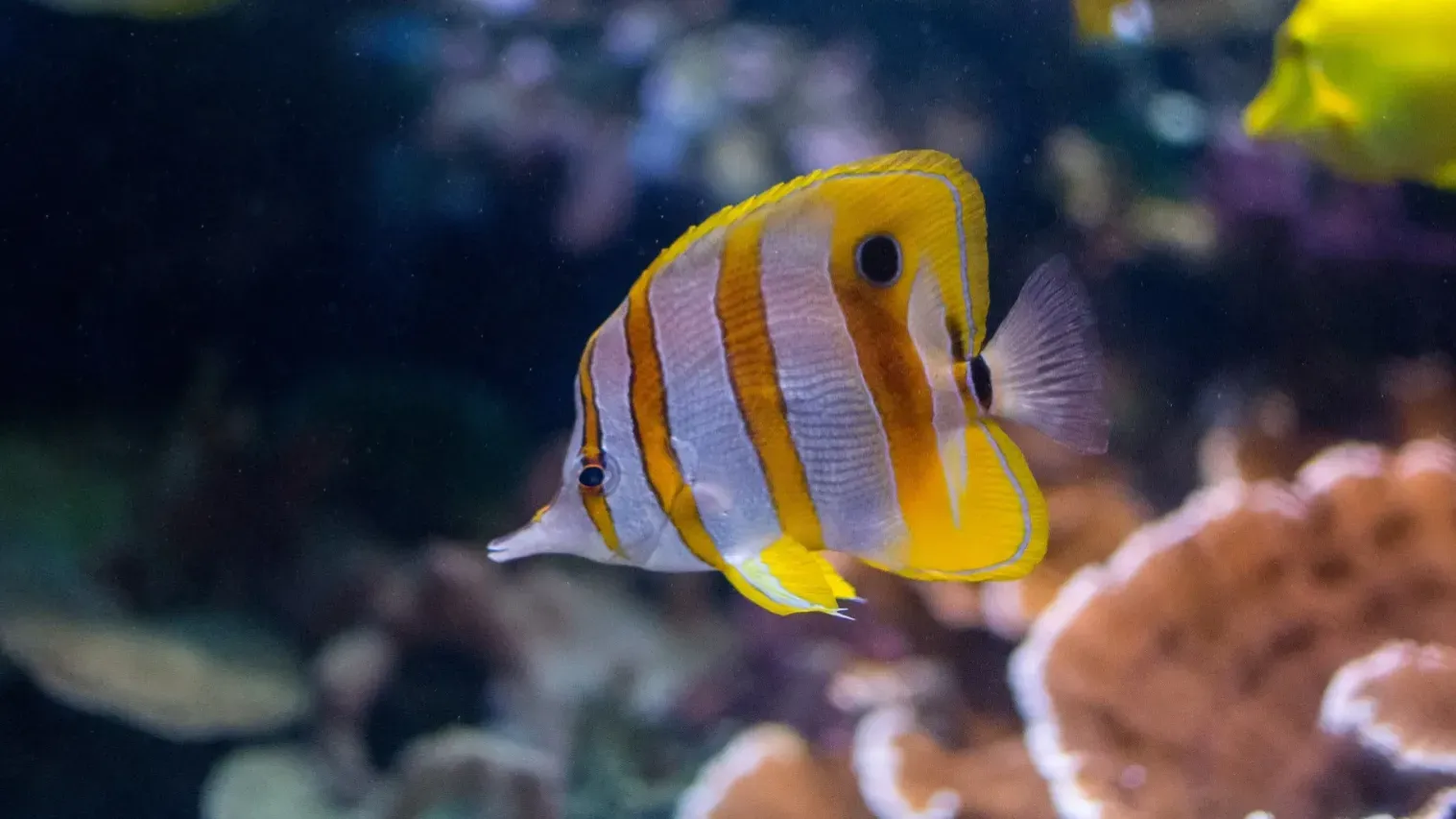
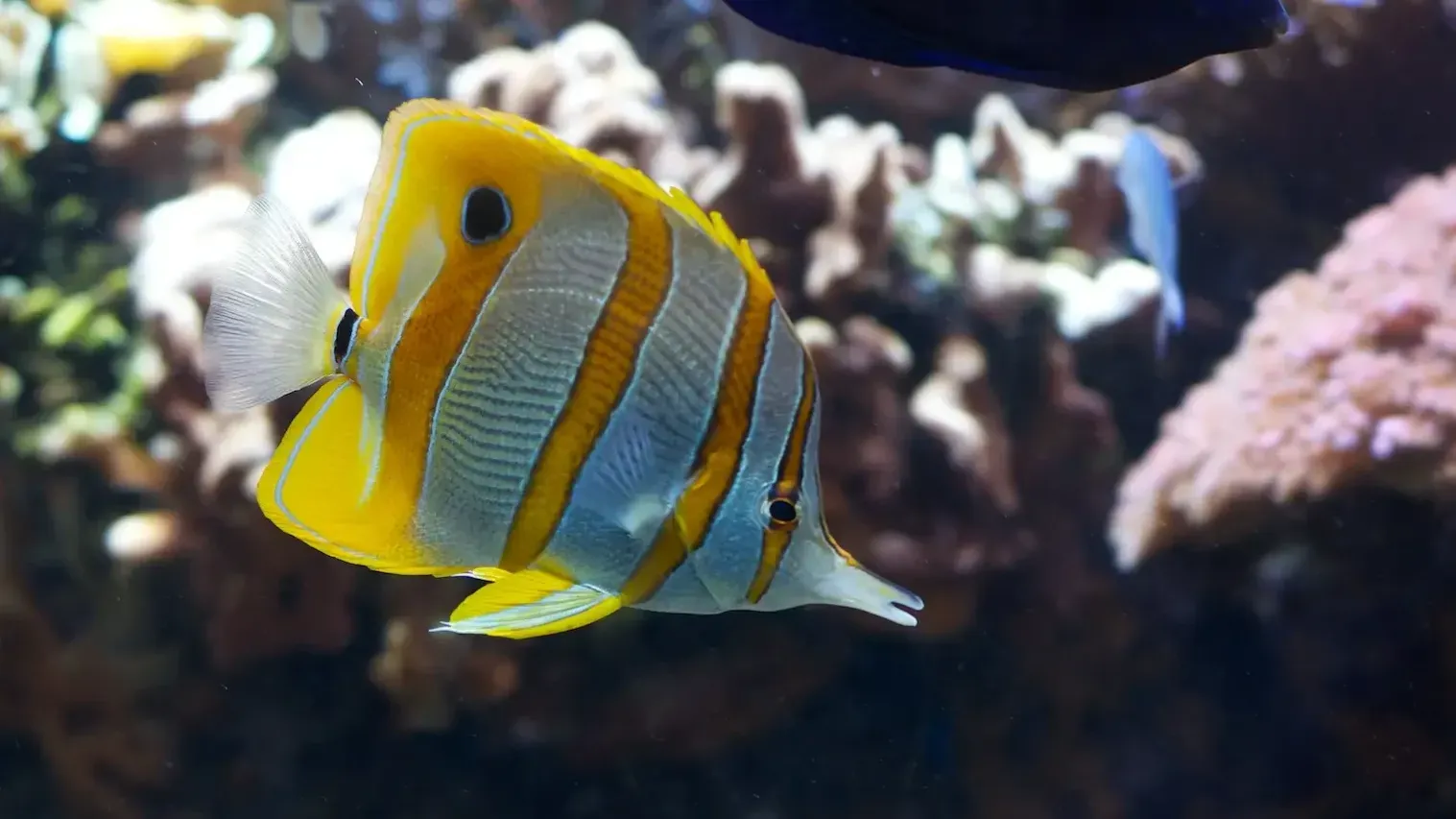
The Copperband Butterflyfish is a sea fish known for its pretty vertical yellow-orange bands on a white body, and a long, thin snout. It is popular among reef hobbyists because of its unique look and its ability to eat pest anemones in reef tanks.
Origin
- It lives in the Indo-Pacific region, from the seas near India, Southeast Asia, up to Australia, and the western Pacific islands.
- In the wild, it is often found around coral reefs and rocky shorelines at depths between 1 and 25 metres.
- When breeding, they often form pairs and are believed to be monogamous (one partner for life).
Copperband Butterflyfish Temperament
- The Copperband Butterflyfish is shy, gentle, and peaceful by nature.
- It is not a strong swimmer across open water; it prefers to stay near rocks and crevices, moving slowly and carefully.
- Because it hunts slowly among corals, it can struggle when in a tank with fast, aggressive fish that steal its food.
Compatibility
Good companions (can live with):
- Peaceful reef fish that don’t bully or outcompete it:
- Blue Green Chromis
- Dwarf Angelfish
- Dottybacks
- Fish introduced at the same time may allow pairing.
Fish to avoid/caution:
- Fast, aggressive fish or large herbivores that chase or stress it.
- Be careful with corals, anemones, and invertebrates: this fish may nip at soft corals or invertebrates, especially if hungry.
- Don’t keep multiple Copperbands unless under ideal conditions or if they are a bonded pair.
Copperband Butterflyfish Price Range
- In India, such a fish might fall in the range of ₹5,000 to ₹15,000 or more, depending on size, health, and source.
Characteristics
Temperament
Aggressive
Friendly
Compatibility with other fishes
Not Friendly
Super Friendly
Habitat Size
Small
Large


Copperband Butterflyfish Habitat Requirements
Initial Setup Cost
₹10,000 - ₹30,000
Water Temperature
24º -28ºC
Water Type
Salt Water
PH Level
8.1 - 8.4
Tank Type
- This is a marine/saltwater reef fish (not freshwater or brackish).
Copperband Butterflyfish Aquarium Size
- The smallest recommended tank has a volume near 75 US gallons (approx. 284 liters).
Water Conditions
- Temperature range: ~ 22 °C to 27 °C (≈ 72–78 °F)
- pH: 8.1 to 8.4 is normal within a reef environment
- For a stable reef ecosystem, water must be hard, salty, stable generally, and of good quality without many pollutants. It reacts to variations.
Copperband Butterflyfish Environment Needs
- Rock lots and crevices: A lot of rock with cracks, caves, and hiding spots, so the fish can forage and feel safe.
- Good water flow: Moderate currents bring food and increase oxygen content.
- Mature reef system: The tank should be well established, stable, and full of natural microfauna such as copepods and worms to consume.
- Open swim space: Enough free water region for movement between rocks.
Essential Equipment
Aquarium tank
Water filter
Heater
Light
Substrate
Copperband Butterflyfish Nutritional Guide
Avg Monthly Expenses
₹200 - ₹ 300
Diet Type
Copperband Butterflyfish Suitable Foods
Live or frozen
- Brine shrimp
- Mysis shrimp
- Small mollusks
- Clams
- Soft bits of shellfish
- Polychaete worms
- Tube worms hidden in rock
It may nibble on Aiptasia (glass anemones) in reef tanks — some use it for natural pest control.
Feeding Frequency & Tips
- Offer small meals two or three times each day rather than one large meal.
- Put food by rock gaps or in cracks to copy normal foraging.
- However, it can be fussy at times, though. Waiting until settling may be better than feeding near the end.
- Remove uneaten food for good water quality.


Copperband Butterflyfish Health & Care
Common Health Issues
White spot / ick
Bacterial infections
Parasites
Swim bladder disease
Fungal infections
Ammonia poisoning
Signs of good health
Active
Bright coloration
Good apetite
Signs of sickness
Loss of appetite
Lethargic behaviour
Dull coloring
Tattered fins
Swimming abnormally
Copperband Butterflyfish common health issues
Internal Bleeding / Tissue Injury
Because Copperbands have a very thin body, they are prone to internal damage. Even small bumps (for example, during shipping or catching) can cause internal bleeding, which shows as dark patches. Once the damage is inside, it is hard to treat and often fatal.
Starvation/Malnutrition
When newly introduced, they often refuse food. If not coaxed to eat or given suitable prey, they may weaken, lose weight, and die. It's crucial to offer live prey in cracks and monitor whether they eat.
Parasitic & Skin Diseases
Like many marine fish, they can suffer from marine ich or external parasites. Stress or poor water quality may trigger infections. Use quarantine, clean water, and proper treatments when needed. (Common for reef fish)
Jumping/Escape
This species can try to jump if stressed or harassed. Tanks should be well covered to prevent escape when they back up and spin their dorsal spines.
Copperband Butterflyfish General Health Tips
- Look for a healthy specimen without dark patches that is actively foraging.
- Adjust slowly to a tank containing microfauna and many hiding places.
- Maintain good water quality. It means low nitrates, stable pH, among other things.
- Provide a natural diet gradually, so the fish transitions to captive feeding.
- Use covers and quiet tankmates to reduce stress.
Prerequisites for a Fish
Adequate tank space
Cleanliness
Effort & commitment
Enriching Environment
Financial Capability
Written by
Happy Pet TeamAuthor
Team Happy Pet is a passionate collective of pet experts, enthusiasts, and advocates dedicated to sharing trusted and insightful content.
Our cont
Frequently Asked Questions
How often should to feed Copperband Butterflyfish?
Feed them two to three times daily to ensure they receive adequate nutrition.
Are Copperband Butterflyfish compatible with other fish?
They can be moderately compatible with other fish, but care should be taken to avoid aggressive tank mates.
What are common health issues for Copperband Butterflyfish?
Common issues include white spot (ich), bacterial infections, parasites, fungal infections, swim bladder disease, and ammonia poisoning.