Home
/
Fish species
/
Julidochromis
Julidochromis
Origin
South Africa
Habitat Size
50-150 Liters
Water Type
Fresh Water
Water Temperature
24º-28ºC
Cost in India
₹80 - ₹150
Size
3 - 4 inches (Small)
Diet
Omnivore

by Happy Pet TeamUpdated on 2 Dec 2025
Julidochromis Fish Guide
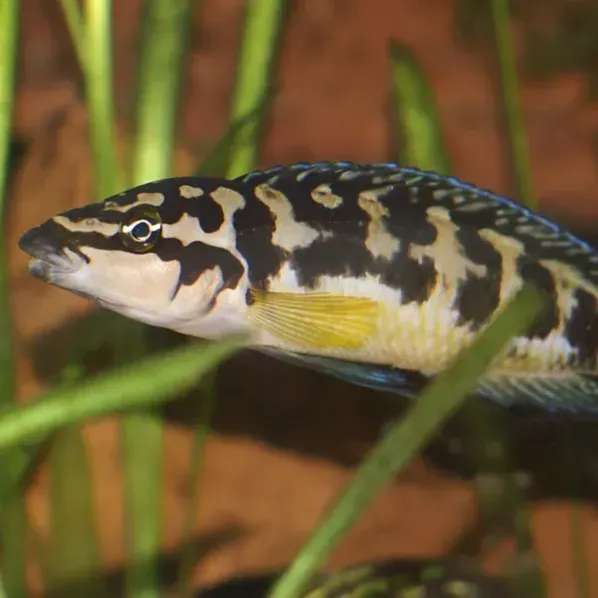
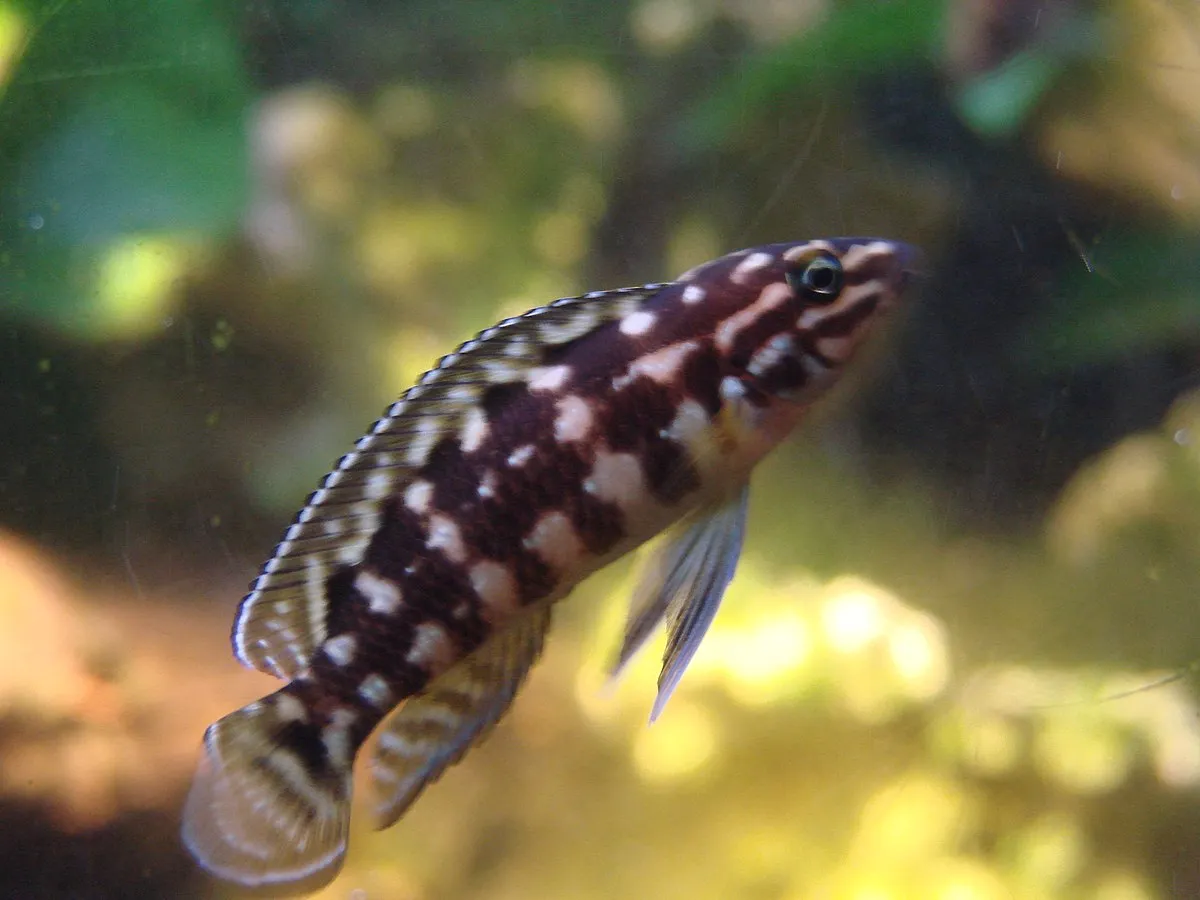
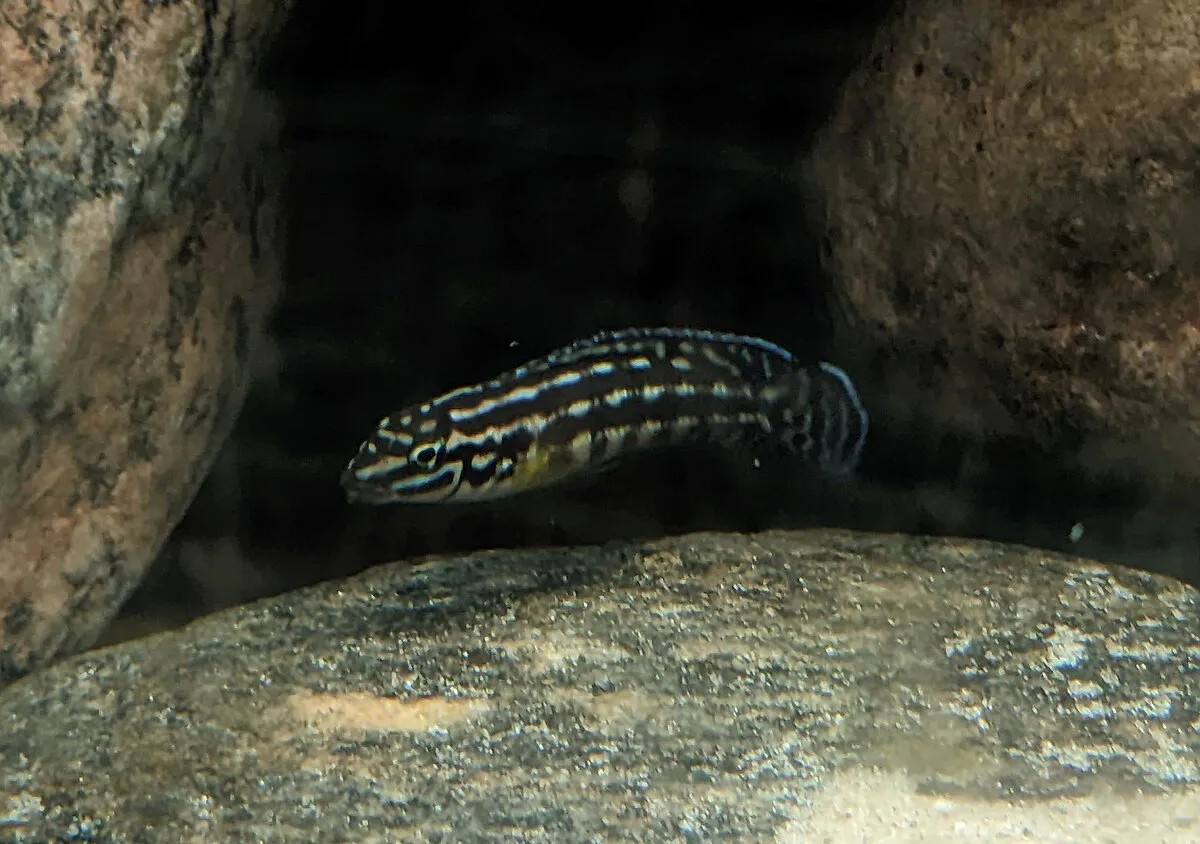
The Julidochromis (julies) is a small, cool-looking cichlid fish with eye-catching patterns and clever behavior. Native to Africa’s famous lake, it’s popular among home aquariums because it hugs rocks, explores hiding spaces, and shows off unique moves that make it fun to watch.
Origin
- The Julidochromis genus comes from the rocky shores of Lake Tanganyika in Eastern Africa.
- Scientists have described six species of Julidochromis so far.
Julidochromis Temperament
- They are territorial: they pick a rock zone or cave and guard it.
- They can be shy at first, hiding among rocks until they feel safe.
- With each other, especially the same species, they may show mild aggression if space is small or hiding spots are few.
- Interestingly, in some species, a larger female may dominate a smaller male — the usual roles are turned around.
Compatibility
- They get along best with other peaceful cichlids from Lake Tanganyika that have similar water needs and rock-based habitat.
- Avoid mixing them with very large, aggressive fish or fish that need very different water conditions (soft acidic water, etc). Because Julidochromis like alkaline, hard water.
- Also, it’s best to keep just one species of Julidochromis in a tank (rather than mixing two species) because they may hybridize (mate across species) or fight over territory.
Julidochromis Price in India
- In Indian aquarium stores, smaller juvenile Julidochromis (for example, 2–4 cm size) are seen around ₹ 250–₹ 500 each
- Depending on species, size, import status, and health, prices may be higher, maybe up to ₹ 500–₹ 800 or more for rarer forms
Characteristics
Temperament
Aggressive
Friendly
Compatibility with other fishes
Not Friendly
Super Friendly
Habitat Size
Small
Large


Julidochromis Habitat Requirements
Initial Setup Cost
₹4,000 - ₹12,000
Water Temperature
24º -28ºC
Water Type
Fresh Water
PH Level
7.8 - 9
Tank Type
- Freshwater
- These fish come from hard, alkaline lake water, so they’re not for soft or acidic tanks
Julidochromis Aquarium Size
- For a pair (male + female) of a small Julidochromis species, a minimum of about 60 cm length tank is recommended
- For multiple or larger species, a bigger tank (60 - 80 L or more) is better
Water Conditions
- Temperature: 23-27°C is suitable
- pH: They like alkaline pH, roughly 8.5-9.0 depending on species.
- Hardness: Water is usually hard to very hard, such as dH values around 12-14 or more.
Julidochromis Environment Needs
- Lots of rocks, caves, crevices: Since in the wild they live among rock surfaces, hiding spots matter a lot.
- Substrate: Sand or fine gravel is fine; ensure stable rock structures.
- Lighting: Moderate. Too bright may stress them; the rock shadows are good.
Essential Equipment
Aquarium tank
Water filter
Heater
Light
Substrate
Julidochromis Nutritional Guide
Avg Monthly Expenses
₹80 - ₹ 150
Diet Type
- These fish are omnivores with a strong tendency toward picking small invertebrates and algae from rocks (especially in the wild)
Julidochromis Suitable Foods
- High-quality flakes or pellets formulated for carnivorous/omnivorous cichlids.
- Frozen or live foods:
- Brine shrimp
- Daphnia
- Small crustaceans
- Some algae-based food or vegetable matter to mimic their natural scraping behavior
- Occasional meaty treats help to enhance health and color
Feeding Frequency & Tips
- Feed small amounts 1-2 times daily rather than one huge meal.
- Remove uneaten food after 5 minutes to keep the water clean.
- Vary the diet to keep them healthy and engaged (not just pellets all the time).
- Monitor their behavior: if they start ignoring food, maybe tank conditions need checking.


Julidochromis Health & Care
Common Health Issues
Fin rot
White spot / ick
Columnaris (cotton wool-like growth on the skin)
Velvet
Parasitic infections
Bacterial infections
Signs of good health
Active
Bright coloration
Good apetite
Signs of sickness
Loss of appetite
Lethargic behaviour
Frequent hiding
Dull coloring
Tattered fins
The health of Julidochromis fishes is closely linked to their habitat and diet. With proper setup, they are quite hardy, but some issues do arise.
Poor water alkalinity / unsuitable water chemistry
If the water’s pH becomes too low or soft (not what they need), you may see stress signs like faded color, hiding more, and refusing food. To treat: test water regularly, ensure alkalinity and hardness are in the correct range (pH ~7.5-9, hardness at recommended levels), and perform regular water changes. Adjust substrate/rock décor to help maintain stable chemistry.
Territorial stress and injuries
Because these fish are territorial and have interesting social behavior, fights may happen if a tank is too small or hiding spots too few. You might see torn fins, chasing, or one fish hiding constantly. To care: provide more caves and rockwork so each fish/pair has its zone; if one fish is being bullied, consider separating it; ensure the tank has enough space and compatible tank-mates.
Dietary neglect and resulting weakness
A diet consisting only of low-quality flakes, or not enough variety in the food, can lead to weak, washed-out, disease-prone fish. The easiest and conventional way to prevent this is to keep the food varied (a mix of flakes, frozen/live foods, some algae/vegetable matter), and to not overfeed them while doing so, as well as maintaining good water quality.
Julidochromis General health tips
- Always cycle and stabilize a new tank before introducing Julidochromis.
- Watch for signs like rapid breathing, faded color, hiding, unusual behavior, and act early.
- Use good filtration and ensure rock caves are secure (no collapsing rocks).
- Keep tank conditions consistent rather than abrupt changes in temperature or chemistry.
Prerequisites for a Fish
Adequate tank space
Cleanliness
Effort & commitment
Enriching Environment
Written by
Happy Pet TeamAuthor
Team Happy Pet is a passionate collective of pet experts, enthusiasts, and advocates dedicated to sharing trusted and insightful content.
Our cont
Frequently Asked Questions
Are Julie Cichlids aggressive?
They can be moderately aggressive, especially during breeding.
Can Julie Cichlids live with other fish?
They can be moderately aggressive, especially during breeding, so they should be kept with similarly tempered species.
What do Julie Cichlids eat?
They are omnivores and eat high-quality flakes, pellets, and live or frozen foods.