Home
/
Fish species
/
Long Nose Hawkfish
Long Nose Hawkfish
Origin
Indo-Pacific
Habitat Size
50-150 Liters
Water Type
Salt Water
Water Temperature
24º-27ºC
Cost in India
₹80 - ₹150
Size
2 - 4 inches (Small)
Diet
Herbivore

by Happy Pet TeamUpdated on 1 Dec 2025
Longnose Hawkfish Fish Guide
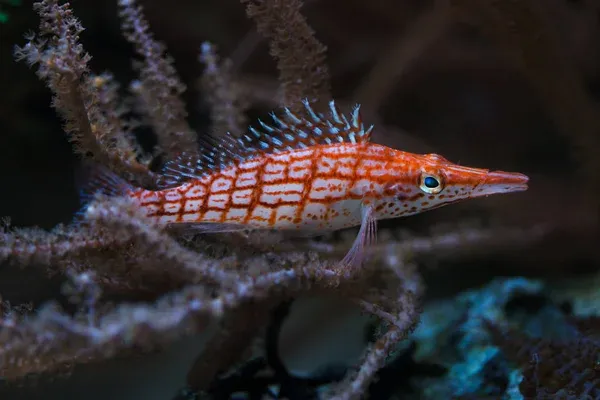
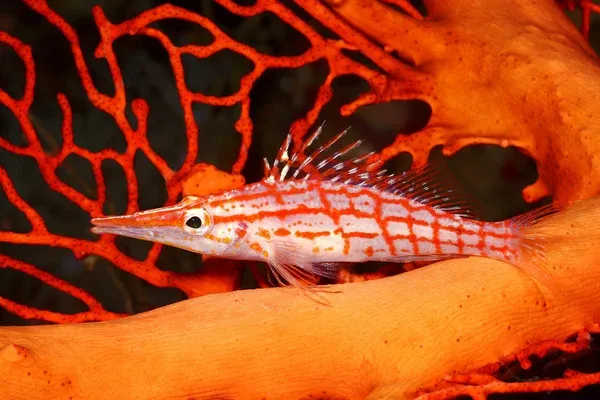
The Longnose Hawkfish is a small, colorful marine fish that is well-loved by aquarium keepers. It has a very long snout (nose) that it uses to reach into tiny crevices. Its body is usually white or pale with a network of red lines, making a grid- or plaid-like pattern. Its uncommon look and interesting behavior make it special among saltwater fish.
Longnose Hawkfish Origin
- This species lives in the Indo-Pacific region, including the Red Sea and across to Hawaii.
- It is often found on steep outer reef slopes near gorgonians and black corals where the current is stronger.
- The longnose hawkfish was first described in 1857 by Pieter Bleeker, and it is the only fish in its genus (Oxycirrhites).
Temperament
- It is territorial — it likes its own space and may defend it.
- But it is not very aggressive toward large fish; it mostly may bother smaller ones.
- It tends to be calm and often perches motionless on coral branches or rocks, watching for prey.
- Because it has no swim bladder, it doesn’t float freely; instead, it “sits” on things or moves by hopping.
Compatibility
- It can live with other fish species that are not so small that it would see them as prey. Good tankmates include mid-sized wrasses, gobies, damselfishes, dottybacks, etc.
- It is risky to keep it with small crustaceans (like shrimp) or very small fish, because it may eat them.
- Also, avoid very strong stinging corals (like some anemones) because their perching behavior might injure it.
- It is usually best to add the hawkfish last in the aquarium so it won’t disrupt existing fish territories too much.
Longnose Hawkfish Price Range
- For a small juvenile/young Longnose Hawkfish: ₹2,500 – ₹5,000
- For a medium / display-size specimen: ₹5,000 – ₹10,000
- For a premium / larger size or rare stock: possibly ₹10,000 – ₹15,000+
Characteristics
Temperament
Aggressive
Friendly
Compatibility with other fishes
Not Friendly
Super Friendly
Habitat Size
Small
Large


Longnose Hawkfish Habitat Requirements
Initial Setup Cost
₹4,000 - ₹12,000
Water Temperature
24º -27ºC
Water Type
Salt Water
PH Level
8.1 - 8.4
Longnose Hawkfish Tank Type
- This is a saltwater (marine) fish — it cannot live in freshwater or brackish water.
Aquarium Size
- The minimum recommended size is around 30 gallons (≈ 115 litres) for a single individual.
- Many hobbyists prefer 40 gallons or more, and for keeping more than one or adding many tankmates, a much larger reef tank is better.
Water Conditions
- Temperature: ~ 75–80 °F (24–26 °C) is ideal.
- pH level: 8.1 to 8.4 is good for marine reef conditions.
- Water hardness/alkalinity (dKH): 8–12 dKH is commonly used.
- Specific Gravity / Salinity: Often maintained between 1.023 and 1.025.
Environment Needs
- Lots of rocks, branches, ledges, caves, as well as perching spots should be within the tank. The fish has a love for resting on the coral. It likes structures like gorgonians, too.
- Use live coral skeletons, fake gorgonians, or branches to mimic its natural perches.
- Light can be moderate to dim because this fish often hides or perches in shadowed spots.
- Since it doesn’t have a swim bladder, ensure the tank has a secure lid, because it might “hop” out.
Essential Equipment
Aquarium tank
Water filter
Heater
Light
Substrate
Decor
Longnose Hawkfish Nutritional Guide
Avg Monthly Expenses
₹80 - ₹ 150
Longnose Hawkfish Diet Type
- The Longnose Hawkfish is a carnivore — it eats meat, especially crustaceans and small animals.
Suitable Foods
- Live or frozen mysis shrimp, brine shrimp, small crustaceans, and bits of fish flesh.
- Some specimens can learn to accept prepared foods, but many prefer meaty, natural foods.
Feeding Frequency & Tips
- A couple of small portions each day is better to feed than one large meal.
- Overfeeding should be avoided. Remaining food holds the potential to taint water.
- Use a feeding stick or target feeding so the food goes near where the hawkfish perches. That helps it spot and catch food easily (common in marine fish guidance)


Longnose Hawkfish Health & Care
Common Health Issues
White spot / ick
Fin rot
Ammonia poisoning
Bacterial infections
Parasitic infections
Fungal infections
Signs of good health
Active
Bright coloration
Good apetite
Signs of sickness
Loss of appetite
Lethargic behaviour
Dull coloring
White growths
Swimming abnormally
Common Health Issues
- Like many marine fish, they are able to suffer from parasitic infections such as Ich or marine velvet (common saltwater fish diseases).
- Water that is found to be poor in quality can cause some stress. If they experience stress, then they are vulnerable to a disease.
Symptoms to Watch
- Loss of appetite
- Clamped fins (fins held close)
- Spots or discoloration on the body
- Rapid breathing or gasping
- Rubbing against surfaces (flashing)
Treatment
- Quarantine new fish before adding.
- Use saltwater dip/cleaning treatment (suitable for marine fishes)
- Maintain stable, clean water conditions.
- If a disease is detected, treat with medications suitable for marine fish (following directions carefully)
Longnose Hawkfish General Health Tips
- Change water regularly, for example, 10 or 20% weekly or biweekly.
- Test the water for pH, nitrate, nitrite, and ammonia.
- Keep the filtration good in conjunction with the water flow.
- Salinity, temperature, and pH should remain consistent.
- Fish feel safe with the provided hiding places.
Prerequisites for a Fish
Adequate tank space
Cleanliness
Effort & commitment
Enriching Environment
Written by
Happy Pet TeamAuthor
Team Happy Pet is a passionate collective of pet experts, enthusiasts, and advocates dedicated to sharing trusted and insightful content.
Our cont
Frequently Asked Questions
What size tank do Long Nose Hawkfish need?
They are relatively small fish, typically reaching about 4 inches (10 cm) in length. A tank size of at least 50 Liters is recommended to provide them with ample swimming space and to accommodate their territorial behaviors.
What do Long Nose Hawkfish eat?
In the wild, they primarily feed on small crustaceans, shrimp, and small fish. In captivity, they readily accept a diet of meaty foods such as frozen mysis shrimp, brine shrimp, and finely chopped seafood. They may also be trained to accept high-quality flakes or pellets.
How do Long Nose Hawkfish behave?
Hawkfish are known for their perching behavior. They will often perch on rocks, corals, or even the aquarium glass, observing their surroundings and waiting for prey to pass by. They are not particularly fast swimmers but are agile and can dart quickly to catch prey.